Spanish moss swathes the signature live oak trees of South Carolina's lowcountry. A translucent wave of mist drifts hauntingly among the ancient trees, some of which have watched hundreds of years pass by. To walk through a live oak forest is to travel back in time, to the days of the Old South.
Emerging from the cool depths of the shaded grove, shards of sunlight, reflecting off the sparkling wetlands, pierce the unadjusted eyes. Instinctively, the lids slam shut, but then, through barely discernible slits in the eyelids, a lowland wonder is revealed. Water has spilled throughout this land. Vibrant green patches of vegetation sprinkle the saturated area. A regal egret pauses among the willowy grasses of the marsh, twisting its graceful white neck into the shape of an S.
The lowcountry, occupying the coast of South Carolina, has an elevation close to, and in some places, below, sea level. The ocean has poured saltwater inland, and with it, a healthy supply of fish. Cobia, tarpon, redfish, sea trout, flounder and striped bass crowd the saltwater creeks and ponds. Pockets of freshwater, full of bass and bream, are scattered throughout the lowcountry. And, mere minutes from the heart of the lowcountry, the Atlantic Ocean entices deep sea fishermen with wahoo, king mackerel, dolphin and tuna.
Environmental traits aren't the only features that define the lowcountry, however. Social gatherings thrive on the lowcountry boil, originally called Frogmore Stew after Richard Gay, who invented the recipe. While Gay was on duty in the National Guard, he would boil a pot of shrimp, sausage and corn, which would serve 100 people. Gay grew up in the town of Frogmore, located on St. Helena Island near Beaufort. The name Frogmore has since been erased by the postal service. The 55-year-old Beaufort Water Festival, an all-volunteer effort, features one of the largest lowcountry boils. Pots comparable to 55-gallon drums are used to cook 1,500 pounds of shrimp, along with the other ingredients, for 3,500 people. The crowd-pleasing lowcountry boil is often prepared for events involving groups of families and friends, music and dancing.
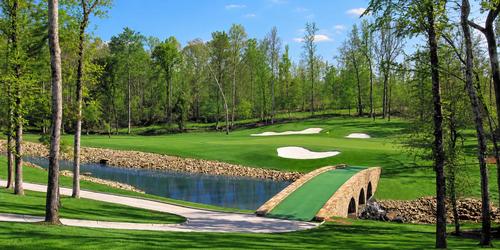
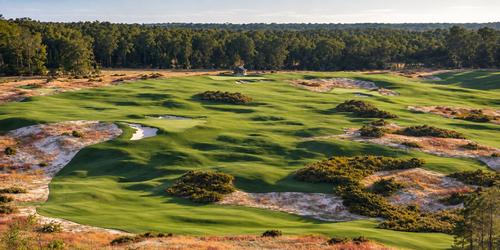
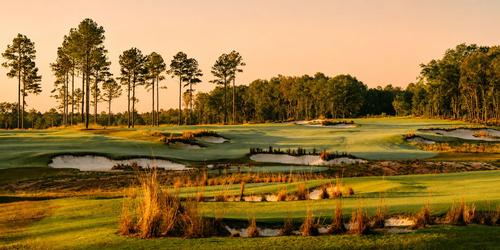
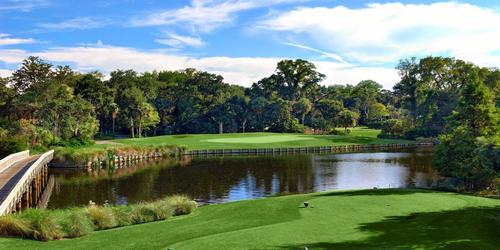
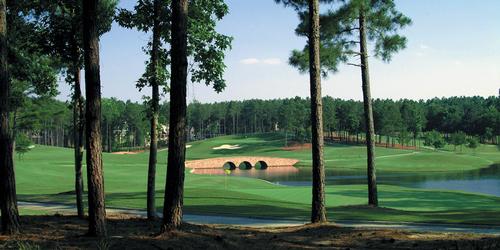
Poking around the lowcountry is an experience that could only be improved by golf. Spring Island, a private golf community located about 25 minutes from Hilton Head and Beaufort, features a unique golf course designed by Arnold Palmer. The course, called Old Tabby Links, was constructed to complement the natural features of Spring Island's lowcountry setting. Vicki Martz, who worked on the design of Old Tabby, said the course was unique in the 1990s because the designers set the minimum width for angle turns at 400 feet. Unlike Spring Island's owners, Jim and Betsy Chaffin and Jim Light, Martz said most owners would not have been willing to shrink the housing component. Martz also explained that Old Tabby features opportunities for strategy - two holes have alternate fairways. Because of the environmentally-conscious planning that went into the development of Old Tabby, Spring Island has won awards for its golf course. Spring Island was also awarded the Urban Land Institute's Sensitive Development Award for establishing the LowCountry Institute, which works with the Spring Island Trust on conservation and preservation issues within the lowcountry region.
All these conservation efforts mean Spring Island remains abundant with plants and wildlife. Not only do live oaks shade the walkways, but 90 other tree species exist on the island. Spring Island touts more than three times the number of trees found on nearby islands. In addition to so many tree species, 600 other species of flora provide habitat for 700 species of wildlife. Wild turkey, whitetail deer and wood ducks mosey through the salt marshlands. The Great Horned Owl, Red-tailed and Cooper's hawks, Bald Eagle and Osprey patrol the sky, while the raccoon, mink, otter, fox and bobcat stalk below. With so many species of wildlife teeming on Spring Island, you might have to watch out when you're golfing.
Old Tabby also incorporates Tabby Ruins, the former plantation house of George Edwards, once the country's richest man. Edwards owned Sea Island Cotton in the 1800s. The Union army burned his plantation during the Civil War, but the three-story house still stands, well-preserved, next to Hole No. 9 of Old Tabby.
Spring Island captures a bit of everything from the lowcountry: landscape, fishing, community and golf. Exploration by boat and kayak is even possible, if not encouraged. If you find yourself in South Carolina, it would be well worth your time to check out Spring Island, at least for the world-class golf.